
The short answer (for readers in a hurry):
Ayurveda has managed high blood sugar for more than 2,000 years under the name madhumeha — and it still does so today with clinically studied herbs such as Daruharidra (Berberis aristata), methi (fenugreek), dalchini (cinnamon), karela (bitter gourd), neem and amla. DiaCare Amrit by Bharat Life Care combines exactly these herbs in an easy-to-brew herbal tea, designed to support healthy glucose metabolism as part of your daily routine — not to replace your doctor’s advice.
Diabetes is one of India’s fastest-growing health challenges, affecting an estimated one in eight Indian adults, with millions more living in prediabetes. Yet the modern response — a pill for every spike — often leaves people asking a simple question: is there a more natural way to support my body?
Ayurveda, the 5,000-year-old Indian system of medicine, says yes. Unlike symptom-only approaches, Ayurveda treats high blood sugar as a root-cause, metabolic disorder — one tied to digestion, lifestyle and the balance of the body’s three doshas: Vata, Pitta and Kapha.
This blog explains how Ayurveda understands blood sugar imbalance, the six herbs it trusts most, and how a modern Ayurvedic product — DiaCare Amrit – Anti-Diabetes Tea by Bharat Life Care — makes that wisdom practical for everyday life.
How Ayurveda Understands High Blood Sugar
In Ayurveda, diabetes is classified as madhumeha (“honey urine”) — a subset of prameha (urinary/metabolic disorders). The classical understanding is that weak digestion (agni) leads to the accumulation of ama (metabolic toxins), which disturbs Kapha and Vata doshas, eventually causing sugar to spill into the urine.
That framing matters, because it shapes the Ayurvedic approach:
- Correct the root cause (metabolism and digestion), not just the number on the glucometer.
- Personalise care — Ayurveda prescribes differently for a Vata-dominant person than for a Kapha-dominant one (your prakriti).
- Treat the whole person — diet, sleep, stress, movement and herbs work together.
Modern research is beginning to echo this: several Ayurvedic anti-diabetic herbs have demonstrated antioxidant, anti-inflammatory and glucose-lowering properties in published studies — a bridge between ancient text and modern laboratory.
Six Ayurvedic Herbs Backed for Blood-Sugar Support
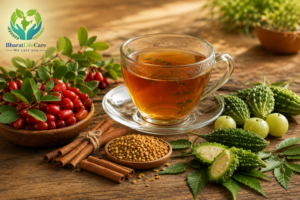
If you search for “best Ayurvedic herbs for diabetes,” these six names appear again and again — in classical texts and in modern research:
| Ayurvedic Herb | Sanskrit / Hindi Name | Traditional Role | Modern Research Interest |
|---|---|---|---|
| Berberis aristata | Daruharidra | Metabolic balance, digestion | Contains berberine, widely studied for glucose metabolism |
| Fenugreek | Methi | Blood-sugar balance | Rich in soluble fibre; supports glucose tolerance |
| Cinnamon | Dalchini | Warming digestive tonic | Shown to support insulin sensitivity |
| Bitter Gourd | Karela | Classic diabetes remedy | Traditionally used in glucose metabolism |
| Neem | Neem | Detox, metabolic health | Supports healthy blood-sugar regulation |
| Indian Gooseberry | Amla | Immunity, digestion | Powerful antioxidant; supports metabolic function |
The takeaway: you don’t need a shelf full of bottles. These herbs work synergistically — and that is exactly the philosophy behind a blended herbal tea.
Why an Ayurvedic Tea? Compliance Is the Real Medicine
Here is the unglamorous truth about diabetes care: the best plan is the one you actually follow. Tablets and powders are easy to abandon. A warm cup of tea, twice a day, is not.
An infusion format offers three practical advantages:
- Gentle, daily dosing — herbs are consumed the way Ayurveda originally intended: as decoctions (kashayam).
- Better adherence — a soothing ritual beats a handful of capsules.
- Chemical-free simplicity — a pure herbal brew means no preservatives, additives or added sugars.
That logic is what guided Bharat Life Care in creating DiaCare Amrit.
Meet DiaCare Amrit: Bharat Life Care’s Ayurvedic Anti-Diabetes Tea
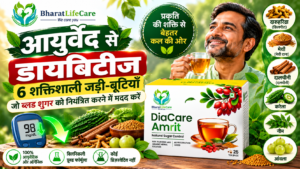
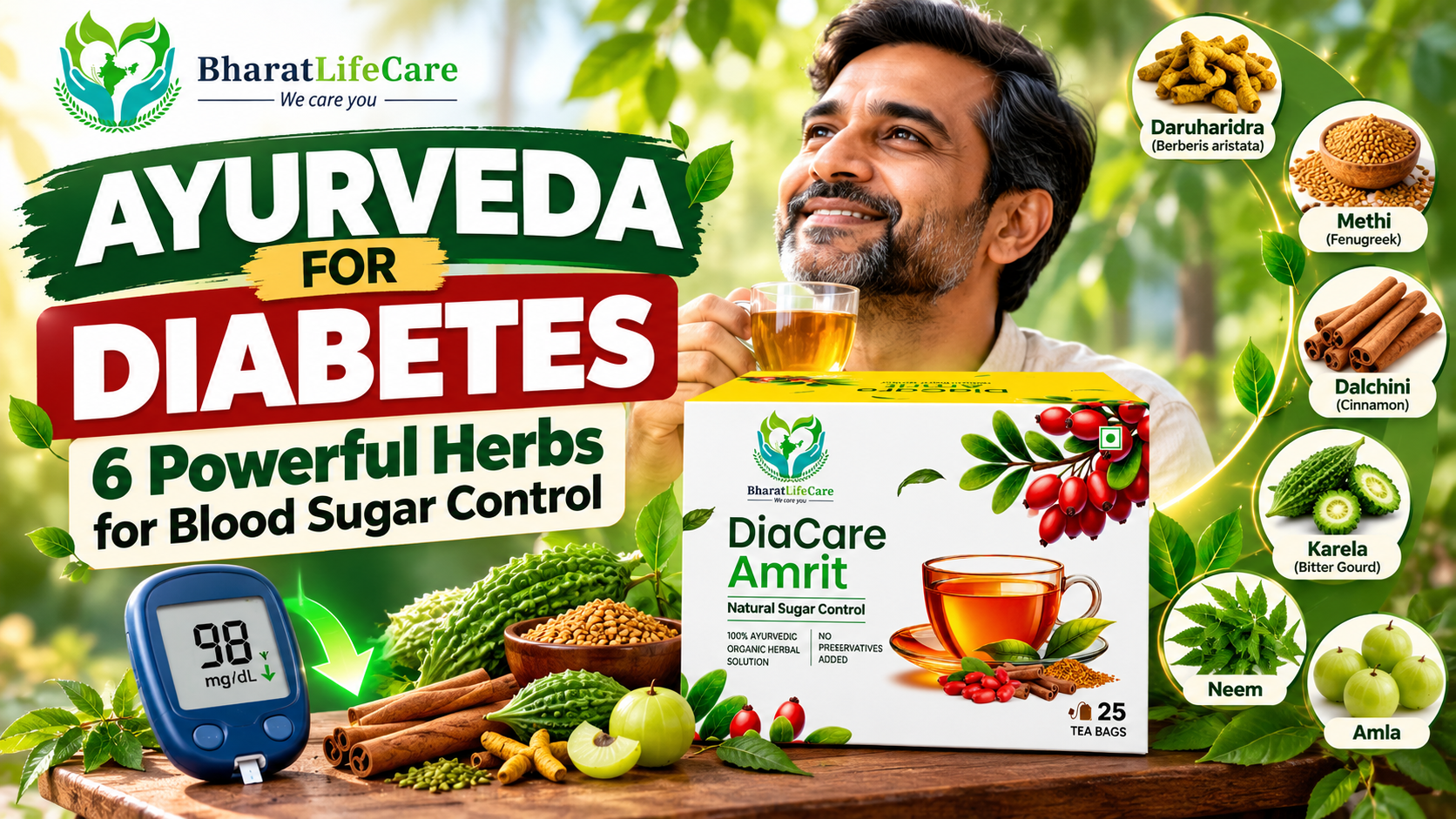
DiaCare Amrit – Anti-Diabetes Tea bags is a 100% natural herbal tea formulated for people managing Type 2 diabetes, prediabetes, or anyone seeking preventive metabolic support. Its star ingredient is Berberis aristata (Daruharidra), complemented by cinnamon, fenugreek, bitter gourd, neem and amla.
What makes it stand out:
- ✅ Ayurvedic wisdom + modern formulation — rooted in classical herbs, made with contemporary quality practices
- ✅ 100% natural — chemical-free, preservative-free and additive-free
- ✅ Convenient tea-bag format — no measuring, no bitterness to mask
- ✅ Made in India — from Bharat Life Care, a health-and-wellness brand built on research-backed, nature-inspired solutions
- ✅ Safe for daily use as part of a healthy lifestyle, for men and women alike
“DiaCare Amrit stands out for its authentic Ayurvedic formulation. Within 6 weeks, I could see positive changes in my sugar readings.” — verified customer review on bharatlifecare.com
How to brew DiaCare Amrit:
- Steep one tea bag in hot water for 5–7 minutes.
- Drink twice daily — once in the morning, once before bedtime.
- Stay consistent — the herbs work synergistically over time.
Tea Alone Is Not Enough: The Ayurvedic Lifestyle That Multiplies Results
Ayurveda never reduces health to a single product. For blood-sugar balance, pair your daily cup of DiaCare Amrit with:
- Eat bitter and fibre-rich first — karela, methi, leafy greens and whole grains at the start of meals.
- Walk after dinner — a 10–15 minute post-meal walk is one of the most underrated glucose tools.
- Move daily — yoga and pranayama improve glycemic control and lower stress-driven sugar spikes. Bharat Life Care outlines this synergy in its International Yoga Day guide.
- Sleep and stress — poor sleep raises cortisol, and cortisol raises sugar. Guard both.
- Follow the Ayurvedic clock — eat your largest meal at midday, when digestive fire (agni) is strongest.
Think of DiaCare Amrit as the herbal anchor of this routine — the daily habit that keeps you consistent when motivation fluctuates.
Who Should Consider DiaCare Amrit — and Who Should Be Cautious?
DiaCare Amrit may be a good fit if you:
- Are managing Type 2 diabetes or prediabetes and want natural adjunct support
- Prefer Ayurvedic, preservative-free options over synthetic supplements
- Want a preventive wellness habit rooted in metabolic health
- Find pills or powders inconvenient and want something simpler
Please be cautious and talk to your doctor first if you:
- Are already on diabetes medication (herbs may amplify effects — monitoring is essential)
- Are pregnant, breastfeeding or managing a serious medical condition
- Expect an “instant cure” — DiaCare Amrit is a long-term wellness solution, not a quick fix
⚠️ Important disclaimer:
This blog is for informational purposes only and is not medical advice. DiaCare Amrit is a complementary wellness product; it does not diagnose, treat or cure any disease and does not replace prescribed medication. Always consult your physician before starting any new supplement, especially if you are on medication for diabetes or any other condition.
Frequently Asked Questions (FAQ)
What is Ayurveda’s view on diabetes?
Ayurveda classifies diabetes as madhumeha, a metabolic disorder caused by weak digestion (agni), accumulated toxins (ama) and imbalanced doshas — primarily Kapha and Vata. Treatment focuses on correcting metabolism through diet, lifestyle and herbs, rather than only managing symptoms.
Which Ayurvedic herbs are best for blood sugar control?
The most researched are Daruharidra (Berberis aristata) — which contains berberine — fenugreek (methi), cinnamon (dalchini), bitter gourd (karela), neem and amla. These herbs support glucose metabolism, insulin sensitivity and antioxidant defence — and that exact spectrum is found in DiaCare Amrit tea.
Can Ayurveda cure diabetes?
No herbal product can claim a cure for diabetes. Ayurveda focuses on long-term management, root-cause correction and prevention. DiaCare Amrit is a complementary wellness tea that supports healthy blood sugar levels alongside diet, exercise and medical guidance — it does not replace prescribed treatment.
What is DiaCare Amrit?
DiaCare Amrit is an anti-diabetes herbal tea by Bharat Life Care, made from a 100% natural blend led by Berberis aristata (Daruharidra), plus cinnamon, fenugreek, bitter gourd, neem and amla. It comes in convenient tea bags and is designed to support natural blood-sugar control.
How do you use DiaCare Amrit tea?
Steep one tea bag in hot water for 5–7 minutes and drink it twice daily — morning and before bedtime. Consistency over weeks is key, as the herbs work synergistically to support glucose management.
Is DiaCare Amrit safe to take with diabetes medicine?
DiaCare Amrit is natural and preservative-free, but always consult your doctor before combining it with diabetes medication, since the combined effect may lower blood sugar further. Your doctor may recommend more frequent glucose monitoring.
How much does DiaCare Amrit cost?
DiaCare Amrit is priced at ₹599 for herbal tea bags. Check the official product page on bharatlifecare.com for current offers and availability.
Is there an Ayurvedic tea for daily blood-sugar support?
Yes — DiaCare Amrit is specifically formulated as a daily anti-diabetes tea. Unlike regular tea, it delivers therapeutic Ayurvedic herbs chosen for glucose metabolism in a convenient, preservative-free tea bag.
Conclusion: Ancient Wisdom, One Cup at a Time
Ayurveda’s approach to blood sugar was never about a magic pill — it was about consistent, root-cause, whole-person care. Modern research keeps validating the herbs it trusted: Daruharidra, methi, dalchini, karela, neem and amla.
DiaCare Amrit by Bharat Life Care puts that entire spectrum into a single, easy daily ritual — a warm cup, morning and night — so the hardest part of any health plan, sticking with it, becomes the easiest.
Ready to build your daily Ayurvedic habit?
👉 Order DiaCare Amrit – Anti-Diabetes Tea on bharatlifecare.com and learn more about Bharat Life Care’s range of wellness solutions.
Disclaimer: The information in this article is educational and is not a substitute for professional medical advice. Always consult a qualified healthcare provider before starting any herbal product, particularly if you are pregnant, nursing, or taking medication for diabetes or any other condition.